To get rid of cockroaches in the kitchen permanently: gel bait applied as hundreds of pea-sized dots, plus an insect growth regulator, plus removing food and water. Bait alone will not work permanently, because it cannot reach the egg cases — kill every adult today and roughly 400 more hatch next week. A kitchen-only German roach problem caught early clears in about two weeks, with stragglers gone by week four.
Always read and follow pesticide label directions. Keep products away from children and pets, and consult a licensed pest control professional for severe or recurring infestations.
Why “permanently” fails without one specific product
This is the reason most kitchen roach treatments come back, and it is a biology problem rather than a product-quality problem.
Poison bait kills foraging adults and older nymphs. It does not penetrate the leathery shell of the egg cases — the oothecae — tucked deep inside wall voids and cabinet gaps. You can kill every visible roach today and still have around 400 new nymphs hatching the following week, restarting the cycle from scratch.
An insect growth regulator is what closes that gap. IGRs do not kill adults. They interfere with the hormone system that controls molting and reproduction, so nymphs never develop into breeding adults and eggs fail to hatch properly. Products containing hydroprene or pyriproxyfen are widely available and approved for residential use.
They also target a growth system mammals do not have, which is why they can be used around a household when the label is followed.
The rule: bait plus IGR, always. Bait alone is a temporary reduction. The pair is what makes the result permanent.
Four mistakes that stop you getting rid of cockroaches in the kitchen
| Mistake | Why it fails | Do this instead |
|---|---|---|
| Bait applied in long thick lines | Roaches read a line as a chemical barrier and walk around it | Hundreds of tiny pea-sized dots pushed deep into cracks and hinges |
| Spraying near the bait | Repellent spray drives roaches away before they can feed | Keep sprays and dusts well away from every bait placement |
| Bait alone, no growth regulator | Bait cannot penetrate egg cases, so the next generation hatches | Deploy an IGR alongside the bait from day one |
| Cleaning up every dead roach | Removes the poisoned bodies that spread the dose through the colony | Vacuum the floor, leave the ones deep in cabinet corners |
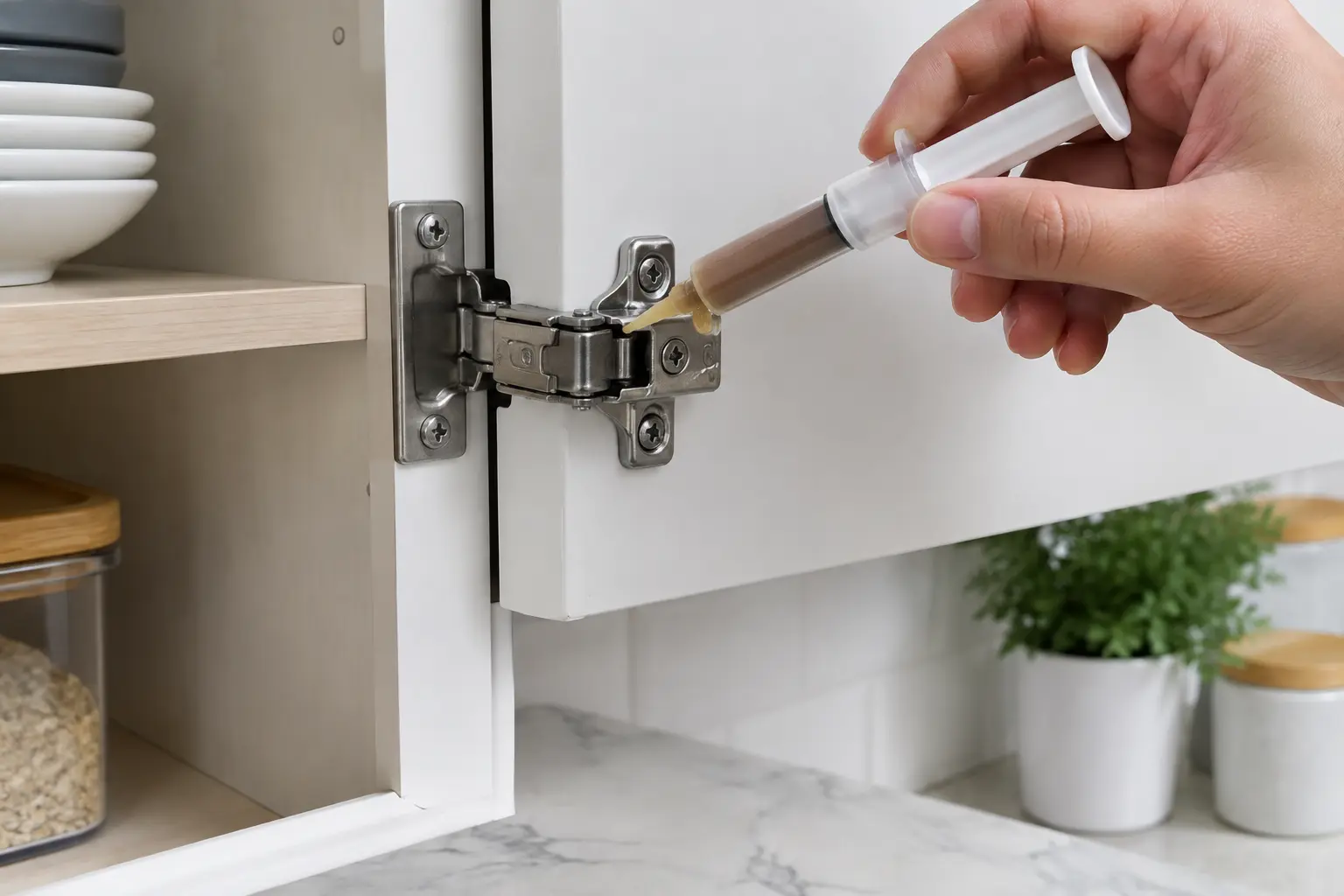
The bait-line mistake is the biggest one. People apply gel bait the way they would apply bathroom caulk — a long, thick bead. Cockroaches do not feed from a line like that; they read it as a chemical barrier and go around it. The bait has to go on as many small dots, pushed into the cracks and hinges where they actually live.
The spray mistake is the most common second failure. Repellent liquids and dusts contaminate bait and drive roaches away from it. If you have already sprayed, that surface is compromised as a bait site.
Step one: remove what is feeding them
German roaches survive on very little, which is why sanitation is not optional preparation — it is what makes the bait attractive by removing the competition.
- Pet food is one of the most common culprits. A single piece of kibble can feed several roaches. Sweep every scrap and store food in sealed containers.
- Dry the sinks at night. Water is the harder resource for them to find, and a dry sink removes it.
- No dishes left out, no crumbs. Wipe surfaces down before bed.
- Empty and clean under and behind appliances, which is where crumbs and grease accumulate unseen.
Do this before baiting, not alongside it. Bait competes with every other food source in the room, and the fewer of those there are, the faster the bait is taken.
Kitchen grime needs its own cleaning method alongside pest treatment. See how to remove grease from kitchen cabinets and build those tasks into a regular home cleaning routine.
Step two: place the bait correctly
Pea-sized dots, and a lot of them. Where they go matters as much as how they are applied.
| Location | Why | What goes there |
|---|---|---|
| Inside cabinet hinges and back walls | Primary harborage | Bait dots |
| Under the refrigerator, behind the stove near the motor | Heat and shelter | Bait dots and an IGR disk |
| Under the sink where plumbing enters the wall | Water and a route in | Bait dots and an IGR disk |
| Underside of the dishwasher | Heat and moisture | Bait dots |
| Behind coffee makers and microwaves | Warm appliances attract them | Bait dots |
| Baseboards, drawer runners, pantry corners | Travel routes | Bait dots |
A safety technique worth using: place bait inside cut drinking straws and tuck the straws into cabinet corners and cracks. The roaches can reach it; children and pets cannot.
Avoid placing bait anywhere cleaning products will wash it away. Reapply as the bait is consumed, or every two to three months.
Step three: add the growth regulator
Point-source IGR disks are the simplest residential option. Snap the disk to activate the ampoule inside, then place them:
- One behind the refrigerator
- One behind the stove
- One under the kitchen sink
The vapors last around 90 days. Leave the disks in place even after you stop seeing live roaches, so that late-hatching eggs are still covered. Removing them early is how an apparently finished job restarts.
IGRs can be applied alongside any bait or insecticide without conflict, and aerosol formulations reapplied roughly every six months keep long-term pressure on the population.
What to expect, and the sign people misread
Seeing more roaches in the first days is normal, and it means the bait is working. High-quality gel baits contain strong food attractants that pull roaches out of wall voids into the open to feed. Within 48 to 72 hours they ingest the poison, return to the nest and the population drops sharply.
Do not respond by spraying. That is the moment most people reach for an aerosol and undo the treatment.
Leave some of the dead roaches where they are. German cockroaches are cannibalistic — they eat the poisoned bodies and droppings of dead roaches, which carries the insecticide deeper into the colony than the bait alone reaches. Vacuum visible dead roaches from the floor, but leave the ones tucked inside cabinet corners.
Timeline: visible roaches drop hard within two to three days. A kitchen-only problem caught early clears in about two weeks, with the last stragglers gone by week four. The IGR keeps working well beyond that.
Knowing what you are dealing with
A single roach seen during the day is a red flag rather than a one-off. German cockroaches are nocturnal, so daytime activity generally means the population is large enough that competition is pushing them out into the open.
A nest looks like a hidden cluster of live roaches, shed skins, egg cases and droppings that resemble ground black pepper. Check behind and under major appliances, inside cabinet voids and around plumbing penetrations.
Set monitor traps in suspected areas to track whether the population is actually falling rather than guessing. If activity persists, repeat the treatment after 14 days.
When to call a professional
Three situations where you will not clear the problem on your own.
A large or long-standing infestation. A proper German cockroach clean-out can take up to three hours of actual treatment time, and one industry observation is that technicians paid on commission often cannot afford to spend that long — which is worth knowing when choosing a company, and worth asking about.
Shared walls. In an apartment or duplex, roaches move between units. Treating one kitchen while the neighboring one is untreated produces reinfestation regardless of technique.
Commercial kitchens are a genuine exception to all of this. There are too many competing food sources for bait to work, so restaurant control relies on insecticides, aerosols, dusts and growth regulators rather than bait.
See our home cleaning routine guide for the sanitation habits that stop an infestation returning once the treatment is done.
FAQ
Can you get rid of cockroaches in the kitchen permanently?
Yes, with bait plus an insect growth regulator plus sanitation. Bait alone is not permanent because it cannot penetrate egg cases, so roughly 400 nymphs can hatch after you have killed every visible adult. The IGR is what stops that next generation reaching breeding age.
Why am I seeing more roaches after using gel bait?
Because it is working. Gel baits contain strong food attractants that pull roaches out of wall voids into the open to feed. Within 48 to 72 hours they carry the poison back to the nest and the population falls sharply. Do not spray at this point — it undoes the treatment.
How should gel bait be applied?
As many tiny pea-sized dots pushed deep into cracks, cabinet hinges and appliance gaps — never as a long thick line. Roaches treat a continuous line as a chemical barrier and walk around it, which is the single most common reason DIY treatments fail.
Can I spray insecticide and use bait together?
Not in the same places. Repellent sprays and dusts contaminate bait and drive roaches away before they can feed on it. Insect growth regulators are the exception — they can be used alongside any bait or insecticide without conflict.
How long does it take to get rid of kitchen cockroaches?
Visible numbers drop hard within two to three days of baiting. A kitchen-only German roach problem caught early usually clears in about two weeks, with the last stragglers gone by week four. Leave IGR disks in place for their full 90-day life regardless.
Should I clean up dead cockroaches?
Vacuum the visible ones from the floor, but leave those tucked deep in cabinet corners. German cockroaches are cannibalistic, and eating the poisoned bodies and droppings spreads the insecticide further into the colony than the bait reaches on its own.