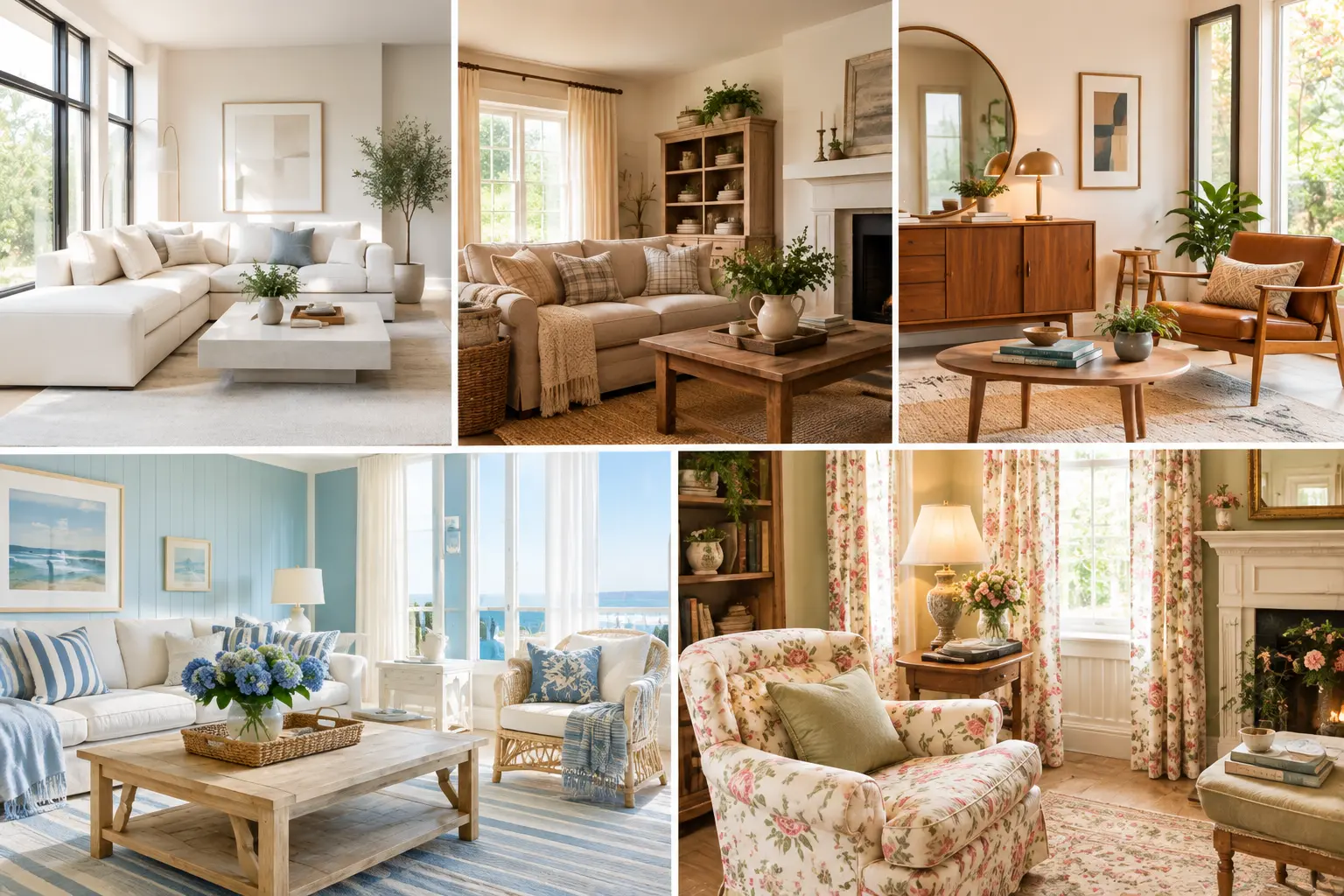
Most people cannot name what is my home design style is, and most homes are not a single style anyway. This quiz takes about two minutes and gives you a primary style plus the secondary influence that usually sits alongside it — including the period and cottage styles that most design quizzes leave out. No email required to see your result.
Q1. Walking into your home, you want to feel…
- Calm and uncluttered
- Warm and welcoming
- Grounded and a little formal
- Surrounded by things with stories
- Like the building has character of its own
Q2. Pick a color palette
- White, grey, black
- Cream, warm wood, soft black
- Deep green, navy, burgundy
- Blue, sand, white
- Mustard, teal, walnut
- Layered rust, ochre, terracotta
Q3. Which material appeals most?
- Polished concrete
- Reclaimed or exposed brick
- Painted shiplap or beadboard
- Walnut or teak with a visible grain
- Rattan, jute, linen
- Chintz, floral fabric, aged oak
Q4. The sofa you would actually buy
- Low, straight-armed, one solid color
- Deep, slipcovered, oversized
- Rolled arms, turned legs, patterned
- Tapered wooden legs, tight upholstery
- Leather, worn in
- Whatever it is, it is covered in cushions
Q5. Lighting you are drawn to
- Recessed, almost invisible
- Exposed bulb, black metal cage
- Sputnik or globe pendant
- Crystal or brass chandelier
- Woven or rattan shade
- Lots of small lamps, no overhead
Q6. A bare wall in your living room. You…
- Leave it bare
- Hang one large piece
- Build a gallery wall of mismatched frames
- Add a framed landscape or portrait
- Put up open shelving with plants
- Hang something woven or a large mirror
Q7. Your relationship with your possessions
- If I have not used it this year, it goes
- I keep things that are useful and hide the rest
- I inherit things and I keep them
- I collect, and I want the collection visible
Q8. Pattern in a room should be…
- Absent
- One stripe or check, nothing more
- Geometric, in a limited palette
- Florals, and more than one
- Damask, toile, something classical
- Whatever I liked, all at once
Q9. Flooring
- Wide plank, light, matte
- Dark stained hardwood
- Polished concrete or large-format tile
- Original boards, imperfect, with rugs over them
- Whatever is under a large patterned rug
Q10. Which room would you photograph?
- An empty, sunlit corner
- A kitchen with a big island and pendant lights
- A study with books to the ceiling
- A living room with a low walnut credenza
- A loft with pipes on show
- A window seat with cushions and a cat
Your Results
Modern Minimalist
Nothing in the room that does not need to be there.
Defined by: Restricted palette, hidden storage, uninterrupted surfaces. Texture does the work color usually does.
Start with: Storage that conceals — closed cabinetry rather than open shelving. Minimalism fails on clutter, not on furniture.
Most common mistake: Confusing empty with cold. Add texture — wool, linen, matte stone — or the room reads as unfinished rather than restrained.
Traditional
Symmetry, quality materials, and furniture with visible craft.
Defined by: Balanced arrangements, dark woods, patterned upholstery, framed art hung in pairs.
Start with: One well-made anchor piece — a dining table or a sofa. Traditional rooms are built around a few good things, not many average ones.
Most common mistake: Matching everything from one collection. Traditional rooms look collected over time, not delivered in one van.
Modern Farmhouse
Rural materials, contemporary layout.
Defined by: White or cream walls, warm wood, black metal fixtures, deep comfortable seating.
Start with: Cabinet and door hardware in matte black. It is the cheapest change that moves a room toward this style.
Most common mistake: Buying signs with words on them. The style is about material honesty; the decor clichés work against it.
Mid-Century Modern
Clean lines, warm wood, and legs on everything.
Defined by: Tapered wooden legs, walnut and teak, geometric pattern, saturated accent colors.
Start with: One authentic or well-reproduced piece — a credenza or a lounge chair — rather than several cheap approximations.
Most common mistake: Buying the shapes without the wood. The warmth of the grain is what stops the style feeling like an office.
Coastal
Light, air, and a limited palette drawn from water and sand.
Defined by: Blue, white and sand tones, natural fibers, sheer window treatments, minimal window covering.
Start with: Replace heavy curtains with something light. Coastal is a lighting style before it is a color style.
Most common mistake: Nautical decoration. Rope, anchors and starfish read as a theme rather than a style; the palette and light do the work.
Industrial
The building’s structure is the decoration.
Defined by: Exposed brick, metal, concrete, visible ductwork, worn leather, open shelving.
Start with: Lighting — black metal, exposed bulb, visible fixings. It signals the style faster than furniture does.
Most common mistake: Applying it to a house with no industrial bones. Without real structure to expose, it becomes surface decoration.
Bohemian / Collected
Layered, personal, and accumulated rather than bought.
Defined by: Mixed patterns, plants, textiles from different places, visible collections, warm earthy colors.
Start with: Rugs and textiles. Layering soft materials is what makes the style read as intentional rather than untidy.
Most common mistake: Buying a boho “set.” The style depends on things having different origins; a matched collection defeats it.
English Cottage / Period
Comfortable, floral, and slightly imperfect on purpose.
Defined by: Florals and chintz, aged wood, small-scale furniture, many lamps rather than overhead light, original features left visible.
Start with: Table and floor lamps. Period rooms are lit at eye level, not from the ceiling — this single change transforms the feel.
Most common mistake: Over-restoring. Original boards, uneven plaster and old hardware are the style; replacing them removes the reason it works.
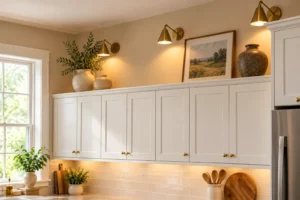
Use your result as a starting point for one room, rather than a shopping list. Try applying it to decorating above kitchen cabinets, or use these budget home improvements to change the details before replacing major furniture.
FAQs
How long does this quiz take?
About two minutes. It has ten quick questions and gives you your result instantly — no email required.
What if my result doesn’t feel like a perfect match?
Most homes blend more than one style. If your top two scores are close, your result will show a primary style plus a secondary influence instead of forcing you into one box.
Do I need to give my email to see my result?
No. Your primary style and secondary influence show up immediately after the quiz. An email is only needed if you want a downloadable mood board and shopping list.
Can I retake the quiz?
Yes, you can retake it anytime — your answers aren’t saved, so feel free to try different responses if you want to explore another style.
Why does the quiz include English Cottage and Period styles when most quizzes don’t?
Most design quizzes skew modern and skip older, vintage, and period-home aesthetics. This quiz specifically includes cottage and period styles to cover homes and tastes that other quizzes leave out.