Most DIY home improvement projects that are genuinely worth doing yourself share one trait: they don’t touch anything hidden behind a wall, floor or ceiling. Painting, caulking, cabinet hardware, weatherstripping, showerheads and peel-and-stick backsplash all pass that test. Electrical circuits, plumbing rough-in and structural changes fail it, and doing those without a permit can cost you an insurance claim.
Which DIY home improvement projects are safe to do yourself?
Before picking a project, apply the hidden-systems test: does the work change anything sealed inside a wall, floor or ceiling?
If no, it is fair game for a homeowner. Paint, hardware, caulk, trim, shelving, mirrors and like-for-like fixture swaps are not inspected, and a mistake costs you an afternoon rather than a claim.
If yes, treat it as licensed-contractor territory until your local building department says otherwise. Work hidden behind drywall must be inspected before it gets sealed up, which is why permits exist for it. Family Handyman notes that any electrical work behind drywall generally requires a permit — including adding an outlet, which many homeowners can do but may not be allowed to do unpermitted.
That test sorts almost every project on this page.
30 DIY home improvement projects, sorted by time and budget
Costs below are typical US material ranges, not checked prices at a named retailer. Verify current pricing before you buy. Every entry is one of the DIY home improvement ideas you can finish without an inspection.
Under one hour, under $50
Start here. Each is reversible, needs no permit, and shows a result the same day.
- Replace outlet and switch cover plates ($1–$4 each). Scuffed plates read as neglect across a whole room. This is the cheapest visual upgrade in the house.
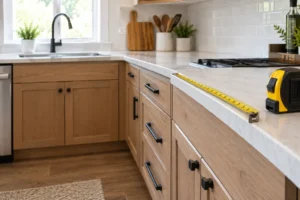
- Swap cabinet knobs and pulls ($2–$8 per piece). Measure the existing hole spacing first — 3 inches and 96mm are not the same, and mismatched centers mean drilling new holes.
- Replace the showerhead ($20–$60). Unscrew, clean the threads, wrap plumber’s tape clockwise, screw the new one on. No shut-off required.
- Fit a new toilet flapper ($5–$12). A worn flapper is the most common cause of a toilet that runs continuously. A plumber charges a call-out fee for a ten-minute job.
- Add weatherstripping to exterior doors ($8–$25 per door). Adhesive foam or V-strip. To find the gaps, hold a lit candle near the closed door edge and watch the flame.
- Install a smart thermostat ($90–$250). Only if your system is low-voltage and has a C-wire. If it doesn’t, stop and call an HVAC technician.
- Re-caulk the bathtub and sink ($6–$15). Cut the old bead out completely with a caulk removal tool. Fresh caulk over failed caulk fails again in months.
- Change every HVAC filter and label the return ($10–$30). Write the size on the vent in marker so you never measure again.
- Fix a sticking interior door (free–$8). Usually a loose hinge screw. Swap the short screw for a 3-inch one that bites into the stud behind the jamb.
- Install soft-close dampers on cabinets and drawers ($10–$25 a set). Adhesive dampers make builder-grade cabinets feel more expensive than they are.
Weekend home improvement projects, $50–$300
- Paint a single room. The highest-impact project on this list. Angi puts a professional interior paint job at $960 to $3,100, averaging around $2,000 — DIY brings that down to paint, tape, rollers and a drop cloth. Satin or eggshell on walls, semi-gloss on trim.
- Paint the front door. Exterior enamel, two coats, door removed and laid flat if possible. Curb appeal for the price of a quart.
- Paint or restain interior trim and molding. Slower than walls because of the cutting-in, but it changes a room more than wall color does.
- Install a peel-and-stick tile backsplash ($3–$8 per square foot). Beginner-friendly, unlike real tile, and removable if you rent.
- Replace bathroom faucet or vanity hardware. A like-for-like faucet swap uses the existing supply lines and shut-off valves. Locate the shut-offs and test them before you start.
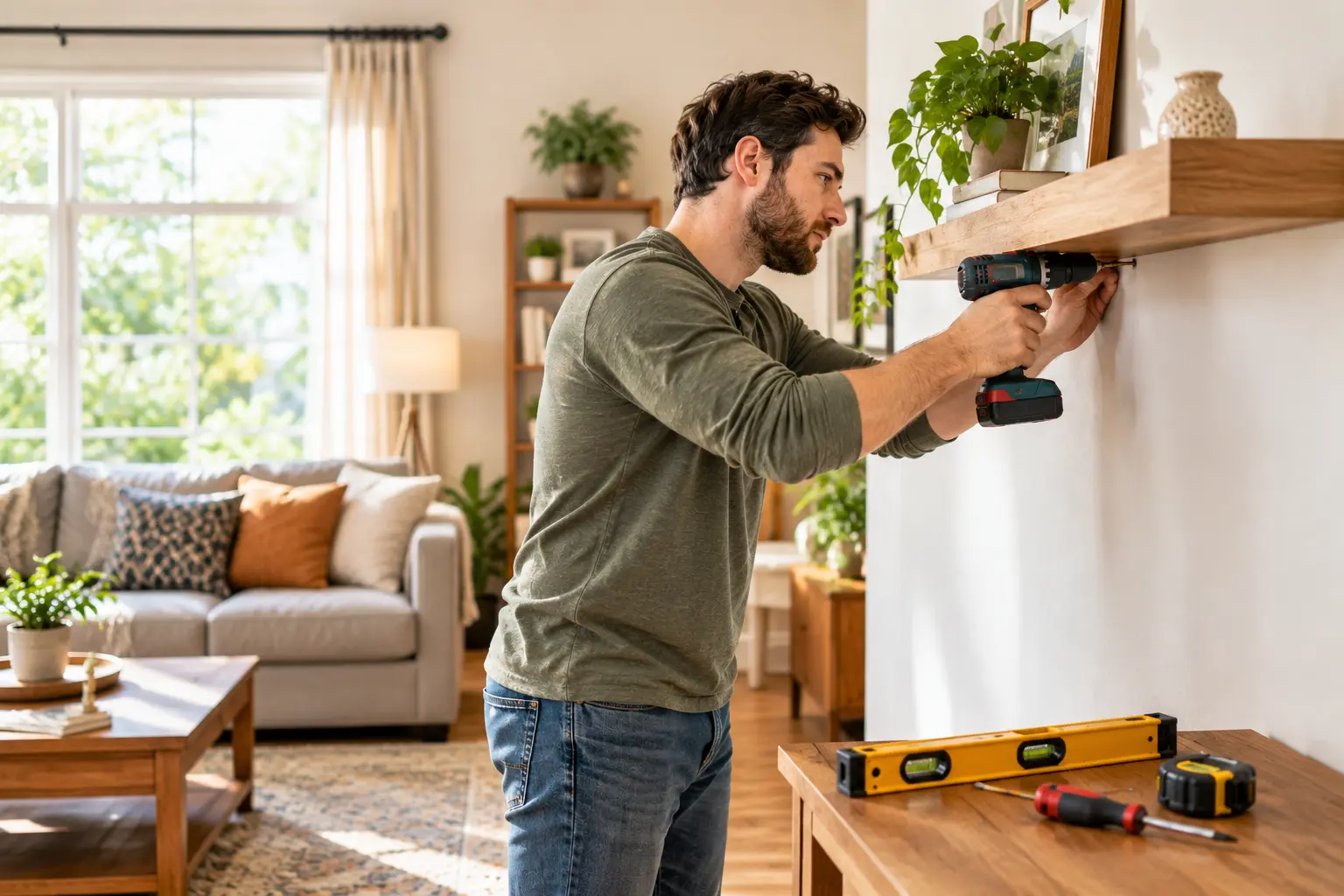
- Hang floating shelves. Find studs with a stud finder; where there are none, use toggle bolts rather than plastic anchors. Plastic anchors are the reason shelves fall off walls.
- Add crown molding to one room. Corners are the difficulty. Pre-cut corner blocks eliminate every compound mitre cut.
- Install a new light fixture (like-for-like swap). Cut the breaker, confirm dead with a voltage tester, match wire for wire. Anything involving new wiring or a new box is an electrician’s job.
- Replace interior door handles and hinges. Standard backset is 2⅜ or 2¾ inches. Check before buying.
- Build a raised garden bed ($60–$150 in cedar or untreated pine). Four boards, corner brackets, landscape fabric.
- Regrout tile and reseal grout lines. Removing old grout is the work. Seal the new grout after 72 hours.
- Add closet organizers or a second hanging rail. Doubling hanging space in a reach-in closet takes one rail, two brackets and an afternoon.
- Add low-voltage landscape lighting on a timer. These systems plug into an existing exterior outlet and need no permit.
- Refinish a wood table or dresser. Orbital sander, wood conditioner, stain, polyurethane. Three days including drying, roughly four hours of actual work.
Bigger projects, $300–$1,500
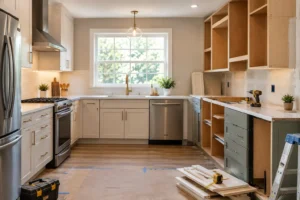
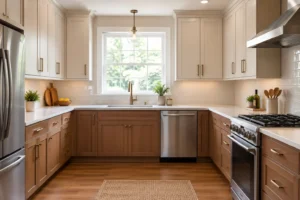
- Paint kitchen cabinets. The highest-value cheap home improvement projects on this list, and also the least forgiving. Degrease, sand, prime with a bonding primer, spray or foam-roll two thin coats. Skip the primer and the finish peels within a year.
- Lay luxury vinyl plank flooring in one room ($2–$7 per square foot). Click-lock planks over a flat subfloor. Check the subfloor is level first; flooring will not fix a dip.
- Build a deck box, bench or planter run. Simple carpentry, no permit, strong payoff in a small yard.
- Replace an interior door slab. Buy pre-hung if the frame is out of square. A slab-only replacement requires transferring the hinge mortises exactly.
- Install board-and-batten or shiplap on a feature wall ($150–$500). Level, brad nailer, construction adhesive, caulk, paint. The caulking and filling take longer than the fixing.
- Replace the garage door — with a professional. Listed because it returns more than any other project on this page, and because it is not a DIY job. Torsion springs store enough energy to cause serious injury.
Which upgrades add the most resale value?
Exterior and visible beats interior and expensive. That pattern has held for decades in Zonda’s annual Remodeling Cost vs. Value Report.
Garage door replacement is the clearest example, though the quoted figure swings depending on the report year. The 2023 report put national recoup at 102.7%. The 2024 report put it at 194%. Zonda’s 2025 edition — the 38th annual — put it at 268%, on a national average job cost of $4,672 adding an estimated $12,507 in resale value, ranking first of 28 projects across all nine US regions. Some 2026 analyses quote figures nearer 190%.
The spread comes from different report years and regional mixes, not disagreement about the ranking. Every version puts exterior replacement above interior remodels. Treat these as survey-based resale estimates, not a guaranteed return on your own house.
| Project | Typical national cost | Reported recoup | Realistic for a DIYer? |
|---|---|---|---|
| Garage door replacement | $4,300–$4,700 | 103%–268% (2023–2025 CVV) | No — hire out |
| Manufactured stone veneer | Varies by facade | ~150% (2026 analyses) | Partly |
| Minor kitchen remodel | Varies | ~96% | Partly — cabinet painting yes |
| Interior painting | $960–$3,100 pro (Angi) | Not tracked separately | Yes |
| Upscale major kitchen remodel | $80,000–$150,000+ | ~40% | No |
| Swimming pool | Varies | ~24% | No |
The rule for choosing between projects: pay for what a buyer sees from the street, and do the cosmetic interior work yourself.
To compare smaller jobs by budget, use our low-cost home improvement ideas. For work outside the house, our exterior improvement guide separates repairs, replacements and finishing touches.
What homeowners are actually spending in 2026
Budgets have tightened, which is why easy DIY home projects are getting more attention than full remodels.
The 2026 US Houzz & Home Study, based on more than 20,000 US homeowners, found the median planned renovation spend for 2026 sits at $15,000, down from $20,000 in 2025. Half of homeowners plan to renovate in 2026, down from 52%.
The Home Improvement Research Institute reported that homeowners planning any home improvement activity in 2026 anticipated spending around $7,117, with a shift toward smaller, necessary work over discretionary renovation.
On the pro side, Angi’s 2024 State of Home Spending Report put average US homeowner spending at $12,050 across all home projects that year: $9,322 on improvements, $1,750 on routine maintenance and $978 on emergency repairs.
All three sources point the same way. Fewer large remodels, more small DIY home improvement projects, more work done in-house.
The starter tool kit that covers 25 of these 30 projects
Buy once, use for years. In rough order of how often you’ll reach for each:
- Cordless drill/driver with a bit set
- Stud finder
- 25-foot tape measure
- 4-foot spirit level (a 2-foot torpedo level for small jobs)
- Utility knife and spare blades
- Caulk gun and a caulk removal tool
- Screwdriver set, including Phillips #2 and a flat head
- Adjustable wrench and channel-lock pliers
- Non-contact voltage tester
- Putty knife, spackle and 120/220-grit sandpaper
- Painter’s tape, drop cloth, 2.5-inch angled brush, roller frame and covers
- Safety glasses and work gloves
A brad nailer and an orbital sander are worth adding after four or five projects. Everything here except trim work and refinishing can be done without them.
Which projects need a permit, and what happens if you skip one
This is the part most roundups leave out, and the part that costs money.
Permits are typically required for electrical work behind drywall, plumbing beyond simple fixture swaps, gas lines, structural alterations including removing a wall, roofing, and decks — even ground-level ones in many jurisdictions.
The consequence is not only a fine. Standard homeowners policies generally do not cover damage from poor handiwork or unpermitted work. What matters is the permit, not who held the screwdriver: pull it, pass the inspection, and the work is generally covered. Skip it, and the insurer has a documented basis to deny a related claim. Water damage sits at or near the top of homeowner claims by frequency and cost, so insurers examine permit history closely on anything water-related.
Requirements vary by municipality, and several states let homeowners do their own work while still requiring a permit for it. A call to your local building department settles it before you start.
For anything structural, gas-related, or touching a load-bearing wall, have a licensed contractor look first. That is cheaper than the alternative.
Where DIY stops paying
Three situations where hiring out is the better financial decision:
- Tool cost exceeds the labor saving. A one-off job needing a wet tile saw, floor sander or paint sprayer is often cheaper to hire out than to equip for.
- The failure mode is expensive. A mistake that puts water inside a wall or creates a fire risk saves you a few hundred dollars and costs five figures.
- It has to be certified. Gas, panel upgrades, sewer lines and new circuits require a licensed trade in most states regardless of skill.
Start with one project this weekend
Pick one project from the first list and finish it. Beginner DIY projects work best in sequence — outlet covers, then cabinet hardware, then a room of paint — because each teaches a skill the next one needs.
The right starting point for most DIY home improvement projects is the tool kit above. Having the drill, stud finder, level and voltage tester ready is what turns a weekend idea into a finished job instead of an abandoned one.
Browse our tested tool and material picks for the DIY home improvement projects in this guide, and get set up before your first weekend.
FAQ
What is the easiest DIY home improvement project for a complete beginner?
Replacing outlet and switch cover plates. One screwdriver, a few dollars a room, no risk with the breaker off, and under 20 minutes for an entire floor. It builds confidence before anything requiring measurement or power tools.
How much money can DIY actually save on a project?
Labor is the larger share of most cosmetic jobs. Interior painting is the clearest case: Angi puts a professional interior paint job at $960 to $3,100, while materials for a single room usually run well under $200. Savings shrink sharply where materials dominate.
Do I need a permit to paint or replace a faucet?
No. Cosmetic work and like-for-like fixture swaps that don’t alter plumbing or electrical runs need no permit. Permits attach to work changing hidden systems — new circuits, repiping, structural changes, roofing and decks. Confirm specifics with your local building department.
Which DIY project adds the most value to a home?
Painting, because it costs the least relative to its visual effect. For tracked resale return, exterior replacement wins: Zonda’s Cost vs. Value Report has consistently ranked garage door replacement first nationally, though that job should be hired out because of the spring tension involved.
How long does it take to learn basic DIY skills?
Drilling, leveling, measuring and cutting caulk cover most of this list, and each takes one project to learn. The skill that takes longest is patience with preparation — sanding, degreasing, priming — which separates a finish that lasts from one that peels.
Is it worth buying tools or renting them?
Buy anything you’ll use more than twice: drill, level, stud finder, tape measure. Rent single-use specialist tools — tile saws, floor sanders, carpet stretchers. Most US home improvement retailers rent by the day, usually for less than a fifth of the purchase price.