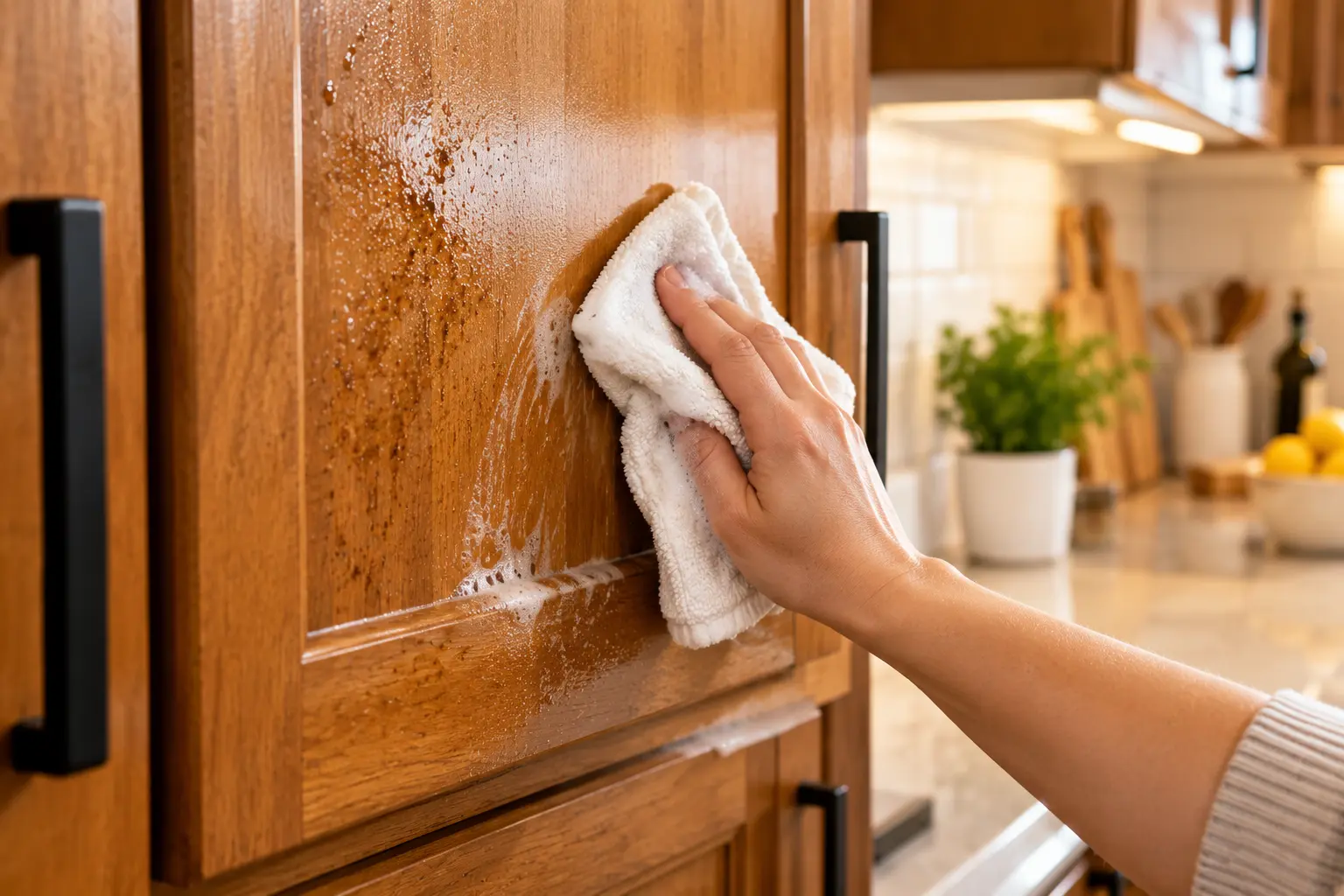
Start with dish soap and warm water, and escalate only if that fails. What you can safely use depends entirely on what your cabinets are made of — vinegar and ammonia strip wood finishes, and undiluted vinegar damages paint over time. The bigger risk is not the cleaner but the water: moisture left sitting on wood causes swelling and can weaken the adhesive holding veneer.
Before you clean grease off kitchen cabinets, check the material
Most guides on this open with a list of cleaning methods. That is the wrong order, because the same method that works perfectly on laminate can strip the finish off wood.
| Cabinet type | Safe to use | Avoid |
|---|---|---|
| Natural or stained wood | Dish soap, oil soap, vinegar at 1 part to 2 parts water | Undiluted vinegar, ammonia, standing water |
| Painted | Dish soap, vinegar diluted equally, baking soda paste | Harsh products on hand-painted or varnished finishes |
| Factory-sprayed | Dish soap and warm water | Anything stronger without testing first |
| Laminate | Dish soap, diluted vinegar, commercial degreaser | Abrasive scouring pads |
| Metal | Dish soap, degreaser, ammonia | Nothing that scratches |
Wood is the sensitive one. It reacts to both moisture and chemicals, and the damage — swelling, clouding, a finish that lifts — is not something you can wipe back off.
Test anything stronger than dish soap on a hidden spot first, whatever your cabinets are made of. Inside a door near the bottom hinge is the usual place.
The vinegar caveat almost every guide skips
Vinegar is the most recommended cabinet degreaser on the internet, and the recommendations are usually incomplete.
Never use it undiluted. The acidity can fade or wear down paint and finishes over time. Diluted, a water and vinegar solution is safe on natural wood, painted surfaces, laminate and plastic.
Wood needs a weaker mix than the standard one. Most guides say equal parts. For wooden cabinets, go to one part vinegar to two parts water to protect the finish.
And it does something soap does not: vinegar neutralizes cooking odors that have worked into the wood, and it leaves no filmy residue behind.
How to clean grease off kitchen cabinets, step by step
- Start with the mildest method that might work. A few drops of dish soap in warm water. Dish soap is formulated specifically to bridge oil and water, which is exactly the problem you have.
- Wring the cloth until it is damp, not dripping. This is the step that protects the cabinet. Do not soak the surface.
- Wipe with gentle but firm strokes, working top to bottom on each door and frame.
- Let it dwell on sticky spots. Rest the damp cloth on the area for a minute before wiping rather than scrubbing harder.
- Use a soft toothbrush for corners, crevices and around handles, where buildup is always worst.
- Rinse with a clean, damp cloth to lift any soap residue. Leaving soap on the surface attracts dust.
- Dry immediately with a soft towel. Never leave moisture sitting.
Two areas need extra attention: around the handles, where hands transfer oils daily, and the runs nearest the stovetop and oven, where airborne grease lands heaviest.
Use paper towels rather than cloth rags for the greasiest passes. Grease stains are notoriously difficult to get out of fabric, and a rag that has absorbed grease just moves it around.
Escalating on stubborn buildup
Years of cooking residue builds into a sticky film that dish soap will not shift. Work up the ladder rather than jumping to the strongest option.
| Grease level | Method | Mix |
|---|---|---|
| Fresh or light | Dish soap and warm water | A few drops of dish soap in a bowl of warm water |
| Moderate | Diluted white vinegar | Equal parts vinegar and warm water — 1:2 on wood |
| Sticky, built up | Baking soda paste | 2 tbsp baking soda to 1 tbsp warm water, sit 5–10 min |
| Wood, any level | Oil soap | Murphy’s recommends ¼ cup per gallon of warm water |
| Heavy, multiple layers | Commercial degreaser | Per label — test on wood first, some strip finishes |
| Severe, laminate or metal only | Ammonia solution | Never on wood or painted cabinets |
Baking soda paste is the step most people skip, and it handles a lot. Mix two tablespoons of baking soda with one tablespoon of warm water, apply to the greasy area, leave it five to ten minutes, then wipe away. It works by gentle abrasion plus degreasing, which is why it clears buildup that liquids alone slide over.
For wood specifically, oil soap is the best regular option. Products designed for wood surfaces will not strip the finish the way vinegar or ammonia can, and the oil component loosens grease while the soap emulsifies it. It cleans and conditions in one step, which means less drying and less wear on the finish over time.
Commercial degreasers come next, and they are safe on painted, laminate and metal cabinets. Test on wood first — some strip finishes.
Ammonia is the last resort and is for laminate and metal only. For wood or painted cabinets with severe grease, a commercial degreaser or professional refinishing is the better path.
Why moisture is the real risk
The thing most likely to damage your cabinets during this job is not the cleaner. It is water left in contact with the surface.
On wood, standing water causes swelling, clouding and finish damage. On anything with a veneer or laminate face, prolonged moisture can weaken the adhesive holding the surface on — which produces the lifting edge that no amount of cleaning fixes.
Three habits prevent all of it: wring the cloth out properly, work in small sections rather than wetting a whole run at once, and dry each section as you finish it rather than at the end.
Why grease ends up everywhere
It is worth understanding, because it explains why cabinets far from the stove get sticky too.
Tiny oil particles vaporize when you cook on the stovetop. They travel through the air as a vapor, settle on nearby surfaces and mix with ordinary dust to form the sticky grime you are dealing with. No surface in a kitchen is out of range.
You usually feel it before you see it. A cabinet door that is slightly tacky under the fingers has a film on it even though it looks clean.
The prevention is genuinely simple: wipe cabinet doors down weekly with a soft cloth dampened in soapy water. A weekly pass takes minutes and stops the buildup that eventually needs baking soda paste and an afternoon.
The same airborne buildup matters when deciding whether to decorate above kitchen cabinets. For recurring kitchen grime, follow the broader home cleaning routine guide rather than waiting for a deep clean.
See our home cleaning routine guide for where a weekly cabinet wipe fits into a schedule you will actually keep.
FAQ
What is the best cleaner for greasy kitchen cabinets?
Start with a few drops of dish soap in warm water, which is formulated to break down oils. If that fails, move to diluted vinegar, then a baking soda paste, then a commercial degreaser. For natural or stained wood, an oil soap is the safest regular option because it will not strip the finish.
Can I use vinegar on wood kitchen cabinets?
Yes, but diluted. Never use it undiluted, since the acidity can fade or wear down finishes over time. On wooden cabinets use one part vinegar to two parts water rather than the usual equal-parts mix, and dry the surface immediately afterwards.
How do I remove sticky built-up grease from cabinets?
Make a paste with two tablespoons of baking soda and one tablespoon of warm water, apply it to the sticky area, leave it five to ten minutes, then wipe away. The combination of gentle abrasion and degreasing clears buildup that liquid cleaners slide over.
Will cleaning damage my cabinet finish?
The cleaner can, and moisture definitely can. Vinegar and ammonia strip wood finishes, and water left sitting causes swelling and can weaken veneer adhesive. Wring the cloth until it is barely damp, work in small sections, and dry each section as you go.
How often should I clean grease off kitchen cabinets?
Wipe the doors weekly with a soft cloth dampened in soapy water. Grease vaporizes off the stovetop and settles across the whole kitchen, so a short weekly pass prevents the buildup that otherwise needs baking soda paste and a full afternoon.
Can I use ammonia on kitchen cabinets?
Only on laminate and metal fronts, which can handle a strong chemical without damage. Never use it on wood or painted cabinets. For severe grease on those surfaces, a commercial degreaser or professional refinishing is the safer route.